

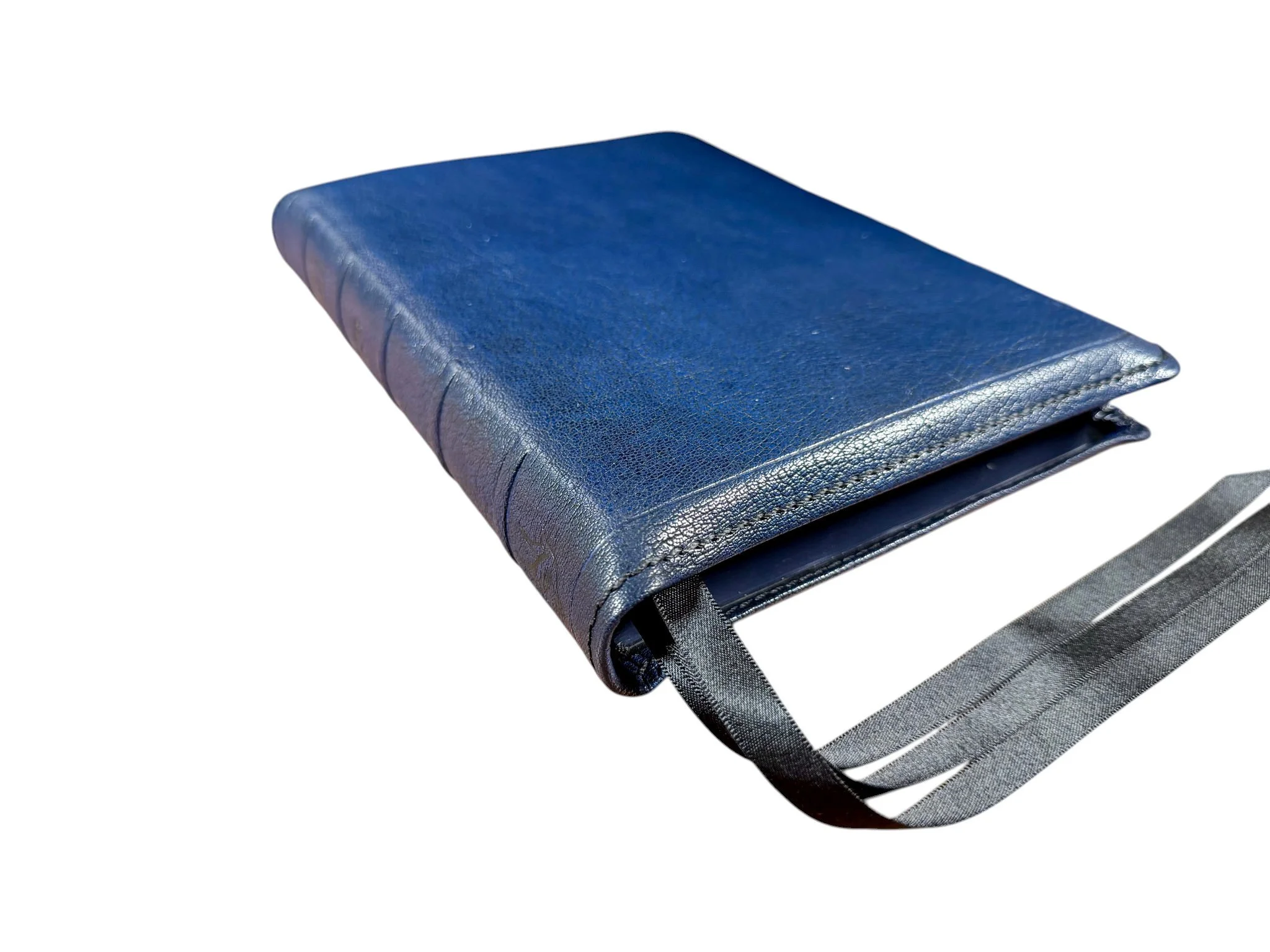
Patina Sauvage Goatskin
Chevre Chagrin "Patina Sauvage" Goat Leather comes from the Alran Tannery in France. The Alran tannery has been producing some of the finest goat leather for luxury brands for over 100 years. They are well known for their premium goat leather and the beautiful colors they are able to produce.
Patina Sauvage is a slightly deeper goatskin grain with a special dark patina finish in the depths of the grain that add an aged beauty to the leather. It is full aniline and has that incredible natural touch similar to liege main
This goat leather is their top grade. The leather is tanned in a full veg-tanned crust and then retanned and dyed with some mineral tannage to add softness and strength at thinner thicknesses. The tanning process involves a unique 23 step process that takes over 4 weeks to produce each hide. This special process involves a lot of hands and working the leather to give it the beautiful grain, soft supple feel and an even color.
**The Patina Sauvage will show more natural variation in the lighter colors. If you like a rustic type look with beautiful variation the Patina Sauvage is a great fit.
MADE IN FRANCE
Characteristics and Advantages of Goatskin
I get asked regularly which leather is best for Bible rebinding. I do my best not to specify any particular leather at first, because everyone’s personal likes are so different. That’s going to be the first deciding factor anyone must decide. What look do you want for your rebind? Do you want a more traditional look, or do you want a more rustic look? Do you want your Bible to look similar to how it looks new in five years, or do you want it to show its age and wear? Answering those questions will be important to what direction you want to go.
Today I discuss goatskin leather. It’s a traditional leather used for decades in Bible bindings. You can’t go wrong with it, but it may not be your personal best option. The following will help describe the characteristics important to consider when choosing your leather.
Goat leather, also known as goatskin, is renowned for its durable, soft, and flexible qualities. This type of leather is highly prized for its natural grain and shine, which adds a touch of elegance and personality to any leather product. Unlike other types of leather, goatskin has a very distinctive and instantly recognizable grain that sets it apart and makes it an ideal choice for various applications. The thickness of goat leather usually ranges from 0,8mm (2 oz.) to 1,4mm (4 oz.) and its surface from 0,2 m2 (2 sq. ft.), in case of baby goat skins, to 0,8m2 (9 sq. ft.) for older animals.
One of the main advantages of goatskin is its durability and luxurious appearance. It is naturally water resistant and can withstand daily wear and tear, making it perfect for Bibles. Furthermore, goatskin is incredibly elastic, allowing it to adapt to shapes and provide resistance, but at the same time versatility of use.
Why Goatskin Leather is a Popular Choice?
Goatskin is a popular choice due to its exceptional qualities. Its combination of strength and softness makes it an excellent option for Bible rebinding. The natural elasticity of goatskin allows it to maintain its shape over time, ensuring a long-lasting and comfortable fit. Furthermore, the aesthetic appeal of goatskin is unparalleled. Its natural grain and shine give a sophisticated look that enhances the appearance of any product.
Tips for Caring for Your Goat Leather
Avoid exposing your goat leather items to direct sunlight for extended periods, as this can cause fading. If your leather gets wet, let it air dry naturally, away from heat sources. Store your goatskin products in a cool, dry place and use a breathable cover to protect them from dust and moisture.
FAQs on Goatskin Leather
1. What are the characteristics of goatskin leather? Goatskin leather is known for its particular grain, natural sheen, and pebbled texture. It is soft, flexible, durable, and water-resistant, making it suitable for various applications.
2. How is goatskin different from other types of leather? Goatskin is softer than cowhide (unless it is upper goatskin). It has a distinctive grain texture and natural sheen, providing a unique aesthetic appeal. Goatskin is also naturally water-resistant and more durable in certain conditions.
3. Is goatskin leather durable and long-lasting? Yes, goatskin leather is highly durable and long-lasting. Its natural water resistance and ability to withstand daily use makes it a robust choice.
4. How do you care for and maintain goatskin leather products? To care for goatskin leather, regularly wipe it with a damp cloth, use a leather conditioner, avoid prolonged exposure to sunlight, and store it in a cool, dry place with a breathable cover.
5. What makes goatskin a popular choice for luxury goods? The softness, strength, natural luster and unique texture of goatskin make it a popular choice for Bibles. Its aesthetic appeal and ability to maintain its shape over time increase its attractiveness.
6. How does goatskin compare to cowhide leather in terms of quality? Goatskin is a good alternative to cowhide in terms of quality. There is no better leather in general and a lot depends on the use to be made of it and the final look you want to achieve.