

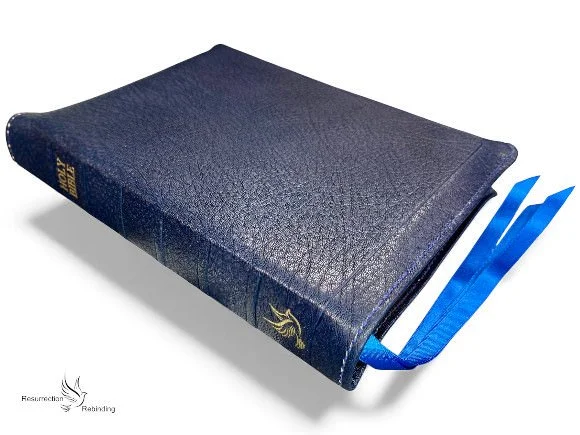
Levant Goatskin
Levant goatskin hasn’t been readily available since before World War II. Careful attempts to master the techniques used to create this leather have been developed by the same supplier that creates Sokoto Traditional goatskin. Using an original Levant hide to reference, they believe, after several years of trials, that they have replicated the process. This newer Levant has a great look and feel. It has a soft temper, great flexibility, grain, and color.
Levant goatskin has a heavier grain than any other goatskin currently available. The heavy grain characteristic comes from shrinking the skins during the tanning process, (not from some “grain manipulation”). Absolutely no grain manipulation either by machine or by hand is used to create this heavy grain. Levant Goatskin is currently my highest recommended available goatskin leather for rebinding. (yes, even when compared to Sokoto Traditional).
The raw skins for this product are sourced in the Levant (the former Ottoman Empire). The skins do not come from Iran, or Iraq. There are only a small amount of these skins available, and they are from the same areas that were historically revered for the very fine goatskins which were historically used for bookbinding in cultural heritage.
Levant has a soft temper, is flexible, and feels great in hand. I don’t know if Levant will eventually have the wide variety of colors that Sokoto Traditional goatskin enjoys, but the colors that Levant has are very nice.
Many of you are aware that I believed Sokoto Traditional to be the premier goatskin leather available to today’s rebinding market. Both leathers have the same approximate weight and temper. However, Levant has a considerably heavier grain that both looks amazing, and feels great. My current evaluation of this leather is that it has now become my favorite goatskin leather.
Why Levant?
Supple, rich texture that tools and stamps beautifully
This is GENUINE Levante, last available prior to WW 2, according to our bookbinder friend,
Should be same leather as used by the most famous Sangorski and Sutcliffe (if these are unfamiliar names, please do an internet search - fascinating)
Easy skiving for a smooth, professional finish
Classic look and feel that honors the finest rebinding traditions
If you're looking for your next go-to goatskin, you may just find your new favorite.
Characteristics and Advantages of Goatskin
I get asked regularly which leather is best for Bible rebinding. I do my best not to specify any particular leather at first, because everyone’s personal likes are so different. That’s going to be the first deciding factor anyone must decide. What look do you want for your rebind? Do you want a more traditional look, or do you want a more rustic look? Do you want your Bible to look similar to how it looks new in five years, or do you want it to show its age and wear? Answering those questions will be important to what direction you want to go.
Today I discuss goatskin leather. It’s a traditional leather used for decades in Bible bindings. You can’t go wrong with it, but it may not be your personal best option. The following will help describe the characteristics important to consider when choosing your leather.
Goat leather, also known as goatskin, is renowned for its durable, soft, and flexible qualities. This type of leather is highly prized for its natural grain and shine, which adds a touch of elegance and personality to any leather product. Unlike other types of leather, goatskin has a very distinctive and instantly recognizable grain that sets it apart and makes it an ideal choice for various applications. The thickness of goat leather usually ranges from 0,8mm (2 oz.) to 1,4mm (4 oz.) and its surface from 0,2 m2 (2 sq. ft.), in case of baby goat skins, to 0,8m2 (9 sq. ft.) for older animals.
One of the main advantages of goatskin is its durability and luxurious appearance. It is naturally water resistant and can withstand daily wear and tear, making it perfect for Bibles. Furthermore, goatskin is incredibly elastic, allowing it to adapt to shapes and provide resistance, but at the same time versatility of use.
Why Goatskin Leather is a Popular Choice?
Goatskin is a popular choice due to its exceptional qualities. Its combination of strength and softness makes it an excellent option for Bible rebinding. The natural elasticity of goatskin allows it to maintain its shape over time, ensuring a long-lasting and comfortable fit. Furthermore, the aesthetic appeal of goatskin is unparalleled. Its natural grain and shine give a sophisticated look that enhances the appearance of any product.
Tips for Caring for Your Goat Leather
Avoid exposing your goat leather items to direct sunlight for extended periods, as this can cause fading. If your leather gets wet, let it air dry naturally, away from heat sources. Store your goatskin products in a cool, dry place and use a breathable cover to protect them from dust and moisture.
FAQs on Goatskin Leather
1. What are the characteristics of goatskin leather? Goatskin leather is known for its particular grain, natural sheen, and pebbled texture. It is soft, flexible, durable, and water-resistant, making it suitable for various applications.
2. How is goatskin different from other types of leather? Goatskin is softer than cowhide (unless it is upper goatskin). It has a distinctive grain texture and natural sheen, providing a unique aesthetic appeal. Goatskin is also naturally water-resistant and more durable in certain conditions.
3. Is goatskin leather durable and long-lasting? Yes, goatskin leather is highly durable and long-lasting. Its natural water resistance and ability to withstand daily use makes it a robust choice.
4. How do you care for and maintain goatskin leather products? To care for goatskin leather, regularly wipe it with a damp cloth, use a leather conditioner, avoid prolonged exposure to sunlight, and store it in a cool, dry place with a breathable cover.
5. What makes goatskin a popular choice for luxury goods? The softness, strength, natural luster and unique texture of goatskin make it a popular choice for Bibles. Its aesthetic appeal and ability to maintain its shape over time increase its attractiveness.
6. How does goatskin compare to cowhide leather in terms of quality? Goatskin is a good alternative to cowhide in terms of quality. There is no better leather in general and a lot depends on the use to be made of it and the final look you want to achieve.