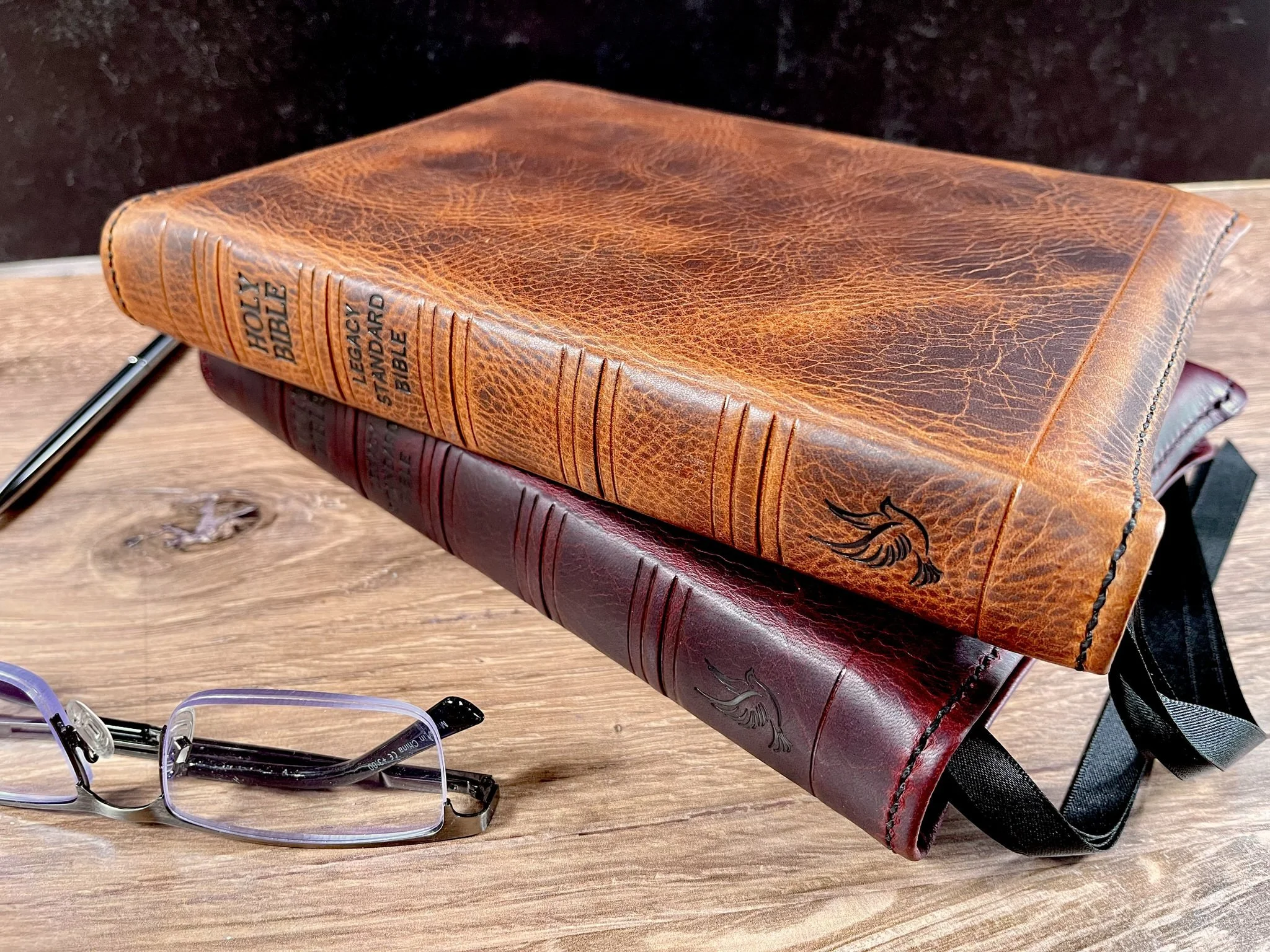
What Is Pull-Up Leather?
There are many different types of leather you can choose from. Low-quality leathers include corrected grain leather, bonded leather, and faux leathers. High-quality leathers include full-grain leather, top-grain leather, suede, nubuck, Vachetta and pull-up leather. If you are already familiar with this last type of leather then you know it is one of the most durable and hard wearing leathers. If you are unfamiliar with it, you are about to learn what you need to know to decide if pull-up leather is right for you.
Pull-up leather, a natural, breathable leather, is also known as “waxed leather,” “wax pull-up leather,” “pull-up effect leather,” “oil pull-up leather,” or “oiled leather.” By whatever name you call it, this full-grain leather is created in a very particular way in order to achieve its robust finish. Hot oil emulsions and natural waxes are infused into the hide during the tanning process. Each cycle can take up to 6 weeks to complete, and produces a rugged yet beautifully smooth leather that can withstand most conditions.
What are the characteristics of pull-up leather?
Durability and longevity
The waxes and oils combine with the leather’s fibers to create a strong bond that makes pull-up leather extremely durable. It won’t tear, flake or warp and will age beautifully over time. Actually, the more stress it’s subjected to the more attractive it will look. This is due to the...
Lightening of different areas
When pull-up leather is pulled, folded or stretched you will see lighter-hued lines, shading and color variations develop in those areas as the waxes and oils shift or are “pulled-up.” This is one of the most desirable characteristics of aniline dyed pull-up leather as it adds an almost 3D element to your Bible. It’s also possible that scars, scratches, wrinkles and other marks natural to the hide also show through the finish which helps to create an attractive appearance.
Development of the patina on pull-up leather
Like most other natural leathers, pull-up will develop a rich patina over time - which adds so much character and depth. However, with pull-up, the patina is likely to develop quicker due to the nature of the material - as discussed above.
How does pull-up leather handle scratches?
Although pull-up leather scratches easily, it can recover quickly. Simply rub your thumb across the scratch and your natural oils and your body heat and will help the waxes to shift and the scrape will diminish. Deeper scratches might not completely disappear, but they will become part of the overall appearance. Given its inherent toughness, pull-up leather takes on scuffs and scrapes better than any other type of leather, which actually enhances its character over time.
How do you care for pull-up leather?
Caring for and cleaning pull-up leather is actually quite easy. Be careful to avoid using strong degreasing detergents as they will damage the leather. Light abrasions can either be rubbed away by your finger or with a soft, dry cloth. For heavier cleaning, dampen the cloth and rub the blemishes away. Don’t rub too aggressively though.
If you like the different hues that are endemic to pull-up leather, this works out well. If not, you will need to treat the entire surface the same way in order to achieve a continuity of coloring. Even though the surface is highly water-resistant, you might still want to apply a waterproofing spray.